


A batch of microcontrollers arrives at your assembly facility in Pune: the price was ten percent below market, and the lead time was a miraculous two weeks. During burn-in testing, half the boards fail. You open a ticket with the chip manufacturer, only to discover that the supplier you bought from is not on their official roster. Your factory line halts, your delivery schedule is ruined, and your cash is locked up in unusable inventory. To verify authorized electronic component distributors in India, you must look beyond slick websites and local sales pitches: you must systematically cross-reference manufacturer databases, dissect local shipping paperwork, and audit tax compliance records. This is not just a matter of procurement hygiene; it is the difference between a functional production line and a multi-crore recall.
The illusion of the local line card
Do not trust a PDF downloaded from a local distributor’s website. Anyone with basic graphic design skills can paste foreign semiconductor logos onto a flyer and call it an active manufacturer line card. In the Indian market, many unverified brokers operate as intermediate buyers. They purchase components from global catalog houses, add a margin, and sell them to local buyers under the guise of direct representation. This practice is not illegal, but it breaks the chain of custody and voids the manufacturer warranty.
Does a local line card guarantee genuine factory authorization?
A line card is simply a marketing document: it is not a legal contract. To verify authorization, you must visit the component manufacturer’s official global portal. Navigate to their authorized distributor directory and filter specifically by region (India). If the local distributor’s exact registered corporate entity does not appear on that list, they are not authorized. They are sourcing through secondary channels, which immediately leaves you exposed to components of unknown origin and age. True franchised distribution means the manufacturer directly supports the distributor with technical resources, direct pricing, and quality guarantees.
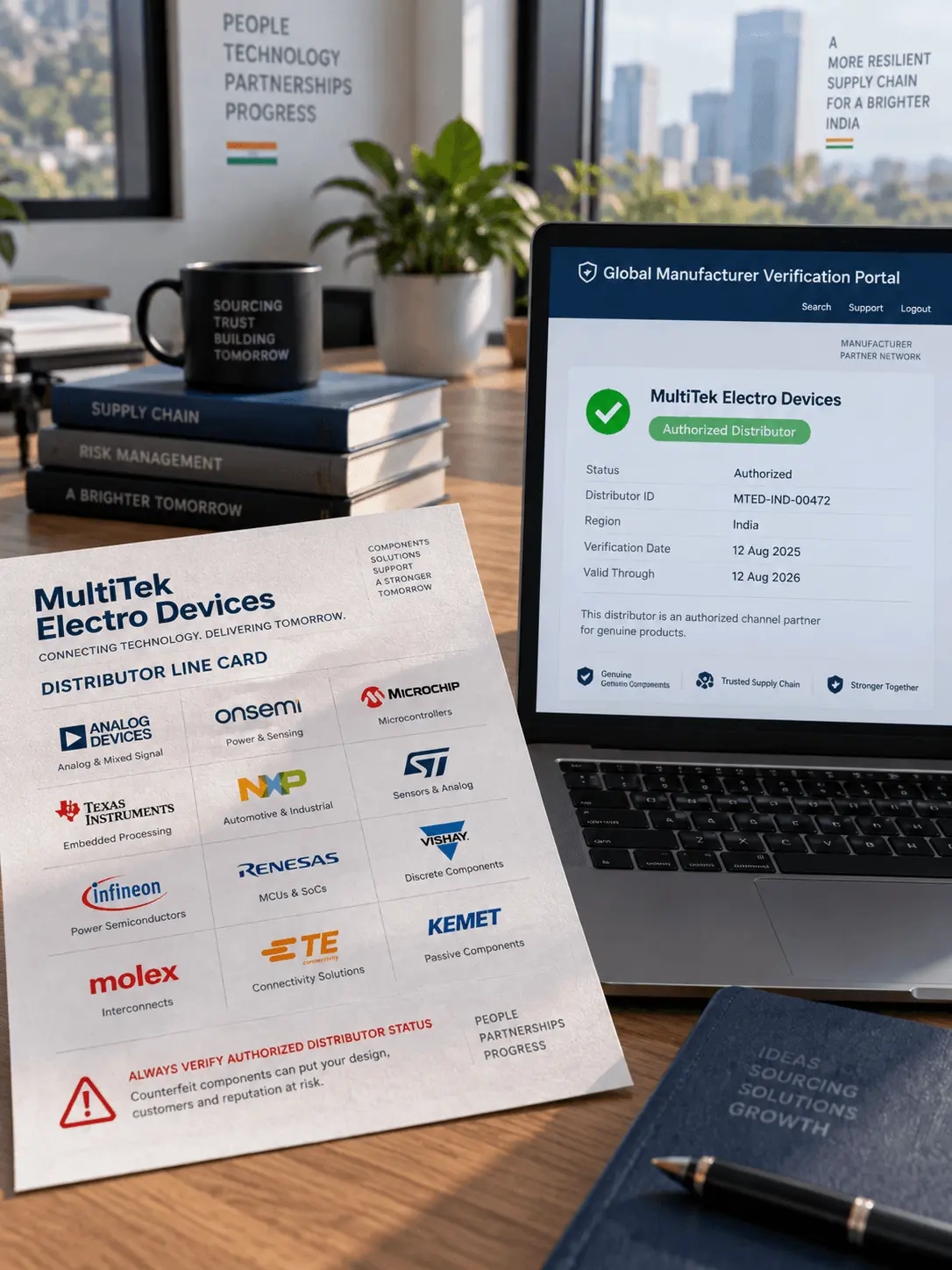
When verifying a distributor, pay close attention to the exact spelling of their corporate name. Many brokers use names that sound remarkably similar to global giants or local authorized players. They register entities with minor variations to confuse procurement teams during the onboarding process. Always match the name on the manufacturer’s website with the name on your corporate quotation and proforma invoice.
Spotting the paper trail left by authorized electronic component distributors in India
India imports the vast majority of its active semiconductor components. This means every authentic component leaves an audit trail that crosses international borders and customs offices. If a distributor claims to offer direct factory pricing and authorization, their shipping documents must reflect this path. You must learn to read these documents to protect your assembly lines.
Can you verify authorization through customs and tax paperwork?
Yes, and this is the most reliable method for local procurement managers. When you purchase from authorized electronic component distributors in India, you have the right to request redacted copies of import documents for your batch. Specifically, look for the Bill of Entry filed with Indian Customs. This document shows the country of origin, the exporting entity, and the importing entity. If the exporter is not the component manufacturer or their global authorized hub, you are dealing with a grey-market broker.
Also, inspect the Certificate of Conformance (CoC) provided with your shipment. A valid CoC must originate from the manufacturer and list the specific lot numbers, date codes, and tracking identifiers matching your physical reels or trays. If a supplier hesitates to provide a CoC, cancel the order immediately. Legitimate distributors maintain strict quality assurance standards and keep these records on file for every single transaction to ensure complete traceability documentation.
Navigating local regulatory compliance and GST records
The Indian tax infrastructure provides an excellent, underused tool for verifying the legitimacy of your suppliers. Every registered business in India must maintain an active Goods and Services Tax Identification Number (GSTIN). This public registry can tell you exactly who you are dealing with before you sign a purchase order.
How does the GST portal expose unverified component brokers?
You can use the public GST search tool to run a background check on any supplier. Enter their GSTIN and review their registered business activities. If a distributor claims to be a high-volume semiconductor specialist but their GST filing shows their primary business category as general trading, software services, or office supply retail, raise a red flag. Legitimate distributors who handle direct imports will also have a clean, active Importer Exporter Code (IEC) issued by the Directorate General of Foreign Trade (DGFT). If they rely on third-party customs clearance agents to bring in their stock under different names, you lose all visibility into the storage, handling, and environmental conditions of your sensitive components.
“A two-rupee passive component failure can brick a fifty-thousand-rupee industrial controller. Sourcing from unauthorized channels to save five percent on BOM cost is the most expensive mistake an electronics manufacturer can make in the Indian market.”
Establishing a physical incoming quality control process
Relying solely on paperwork is risky. You must pair administrative checks with physical incoming quality control (IQC). Even if a distributor claims authorization, your warehouse team must act as the final line of defense against counterfeit components.
What physical checks protect your production line from counterfeit parts?
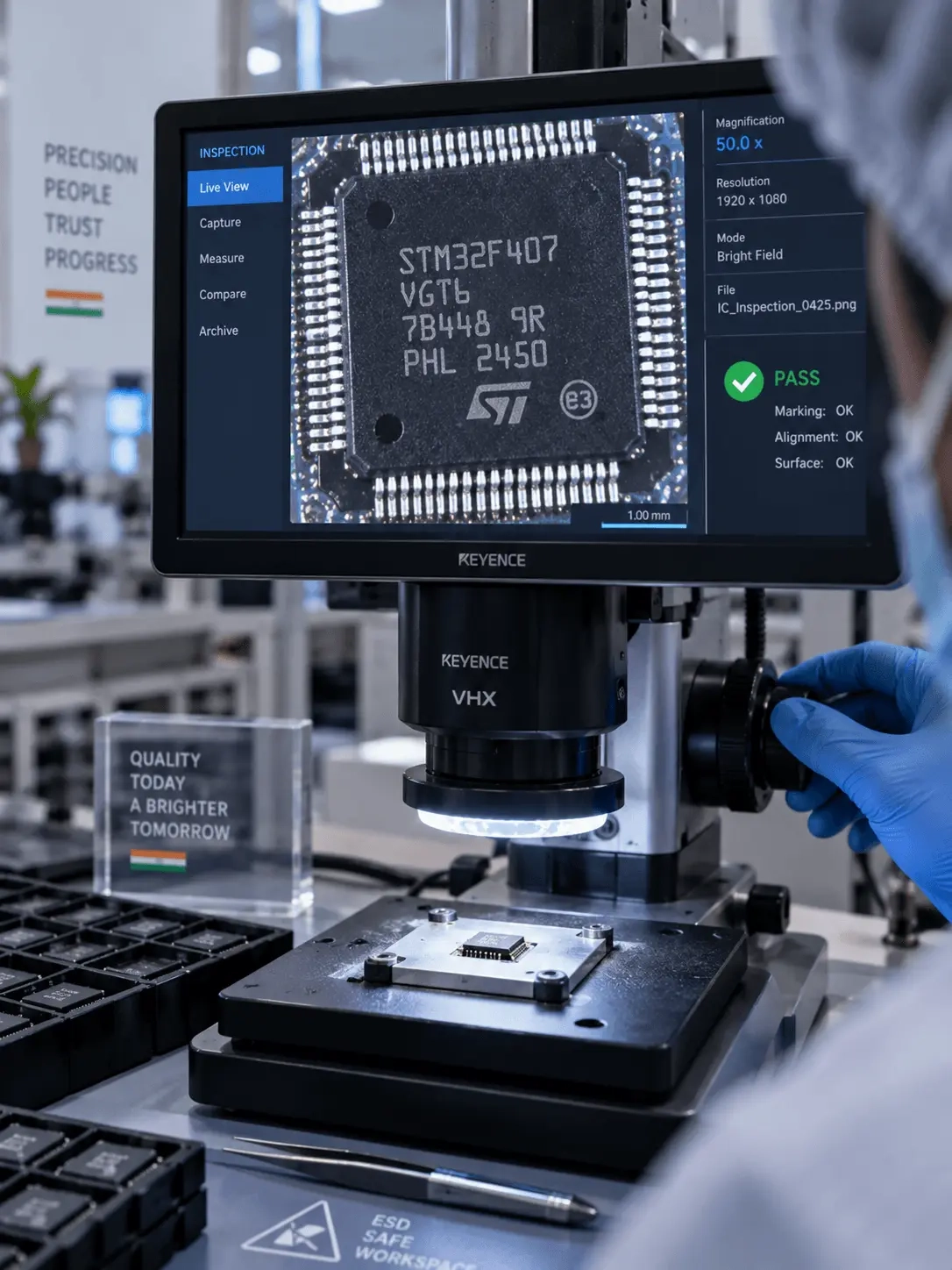
Your incoming inspection team must be trained to identify signs of package tampering. Look for inconsistent laser marking on IC packages, mismatched font styles on the same batch of components, and scratch marks on lead frames that suggest previous soldering or re-tinning. Authorized distributors store components in strict ESD-safe, temperature-controlled environments. They ship them in original factory packaging with intact moisture barrier bags and humidity indicator cards. If your components arrive in loose, unbranded plastic bags with hand-written labels, they did not come from an authorized source. Even if the parts are functional today, their long-term reliability is compromised, leading to premature field failures that can destroy your brand’s reputation.
The hidden costs of grey-market sourcing
Sourcing from unauthorized channels is often driven by cost-saving pressures or severe component shortages. While the lower unit price or immediate availability is tempting, the long-term costs of using independent distributors without verification are devastating. When you buy from unverified sources, you lose access to manufacturer product change notifications (PCNs) and end-of-life (EOL) alerts, which are critical for long-term product lifecycle management.
Is the risk of using independent brokers ever worth it?
If you must source from independent brokers due to extreme factory allocation, you must treat them with deep skepticism. Implement a strict risk-mitigation protocol. This includes sending samples to external test labs for decapsulation, X-ray inspection, and electrical testing according to AS6081 or IDEA-STD-1010 standards. However, for standard production runs, sticking with authorized channels is the only way to guarantee a secure supply chain. The peace of mind, technical support from factory field application engineers, and guaranteed product longevity far outweigh the minor savings offered by unverified sources. Engaging in proper kitting and procurement services with a trusted local partner keeps your BOM clean and your production lines running smoothly.
Secure your component procurement with MultiTek Electro Devices
Procuring genuine parts requires a partner who values quality as much as you do. As one of the premier authorized electronic component distributors in India, MultiTek Electro Devices guarantees absolute traceability, direct factory-backed support, and strict compliance with local import regulations. We remove the guesswork from your component procurement pipeline so you can focus on building world-class hardware. Check our comprehensive authorized line card, review our quality standards, or contact our procurement experts today to secure your next production batch.
Frequently asked questions
How do I verify if an Indian distributor is truly authorized by a manufacturer?
Always bypass the distributor’s own marketing materials and visit the component manufacturer’s official global website. Use their authorized distributor directory and filter by India. If the exact registered corporate name of the distributor does not appear, they are not authorized for that brand.
What is a Certificate of Conformance (CoC) and why is it critical?
A Certificate of Conformance is a document issued by the original component manufacturer certifying that the parts meet all technical specifications and quality standards. It provides a legal paper trail from the factory floor to your warehouse, proving that the components are genuine and have not been altered.
Can I trust a distributor that is not listed on the manufacturer’s portal but has a local certificate?
No. Local certificates can be easily forged or misrepresented. If a distributor is not listed on the manufacturer’s global portal, they are sourcing through secondary or grey markets. This means your parts lack factory warranty support and are at a much higher risk of being counterfeit or poorly stored.
How does checking the GSTIN help in verifying a component distributor in India?
Checking the GSTIN on the government portal reveals the distributor’s registered business name, active status, and primary business activity. If they claim to be a major electronic distributor but are registered under general trading or unrelated services, it indicates they are likely a broker rather than an authorized stocking distributor.
What are the main physical red flags of counterfeit electronic components?
Key physical red flags include inconsistent laser markings, different fonts on the same batch, scratch marks on the lead frames, signs of re-tinning, and non-standard packaging. Genuine parts from authorized distributors always ship in original factory packaging with proper ESD protection and moisture barrier bags.